CI/CD Insights &
DevOps Intelligence
Deep dives, tutorials, and real-world stories from the BuildNinja engineering team. Stay ahead of the curve in modern software delivery.
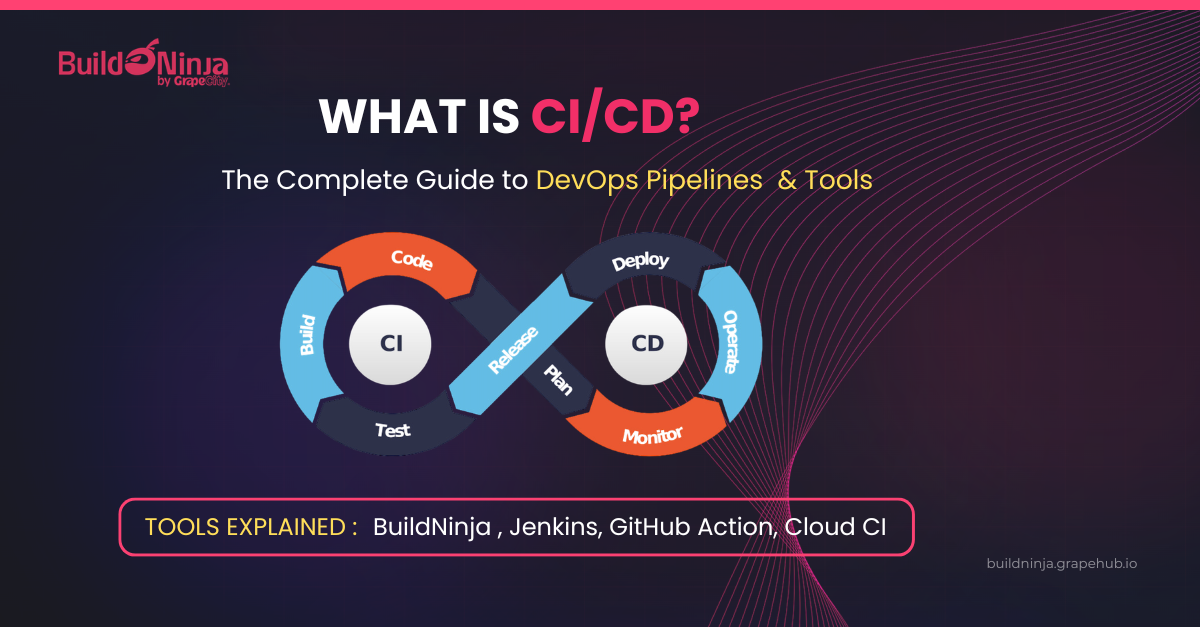
What Is CI/CD? The Complete Guide to DevOps Pipelines and Tools
Learn what CI/CD is, how CI/CD pipelines work, and which CI and CD tools are best for your team. Covers Jenkins, blue-green deployment, DORA metrics, and self-hosted CI/CD with BuildNinja.

Jenkins vs BuildNinja (2026): Honest CI/CD Comparison for DevOps Teams
Jenkins or BuildNinja? This honest 2026 CI/CD comparison covers setup complexity, features, pricing, and DevOps workflows.
BuildNinja v1.1: Faster Builds, Stronger Security, Total Control
BuildNinja v1.1 brings native Git performance, SSH & Script Runners, RBAC security, custom notifications, and macOS support. Faster builds and full control.

Top 10 Jenkins Alternatives in 2026: Complete Guide for DevOps Teams
Looking for Jenkins alternatives? Compare 10 modern CI/CD platforms including BuildNinja, CircleCI, and Harness. Expert insights for DevOps teams in 2026.

10 CI/CD Build Configurations You Can Copy and Run Today
Need a CI/CD example for your stack? Use these 10 BuildNinja YAML configurations built from real open-source repos—set up and run your first build in under 5 minutes.
Setting Up BuildNinja in 5 Minutes: A Complete CI/CD Guide for Modern Developers
Learn how to set up BuildNinja CI/CD in under 5 minutes. Windows, Linux, Docker, Kubernetes installation steps, architecture, and comparisons with Jenkins & GitHub Actions.

5 Signs It's Time to Leave Jenkins
If your team is growing and Continuous Integration and Continuous Delivery (CI/CD) is starting to feel slow, fragile, or political, you’re not alone. Many teams accept build queues, brittle CI/CD pipelines, and constant coordination as “normal growing pains.” We did too. When we started building BuildNinja, someone asked, “Why are you building another CI/CD tool? Isn’t Jenkins good enough?” The honest answer wasn’t that Jenkins is bad — it’s that we’d spent two years living with problems we...

Jenkins Complexity: Why Jenkins Is Too Complex and How to Simplify It
Your deployment failed on Friday, 4:47 PM. A Jenkins plugin conflict nobody could debug before the weekend. Three hours on Monday morning untangling it while your product team waited to ship. This isn’t a Jenkins problem. It’s a scale problem. At 8 developers, Jenkins made sense: free, flexible, battle-tested. At 50 engineers, that same tool starts to feel like a second job. The plugin ecosystem that promised infinite extensibility now delivers endless maintenance. If you’re leading a growing...